What Is Laser Dentistry? | CuraSmile PH BGC
What is laser dentistry? Learn how dental lasers work, their clinical uses, safety, and benefits for gum care, soft tissue procedures & more.
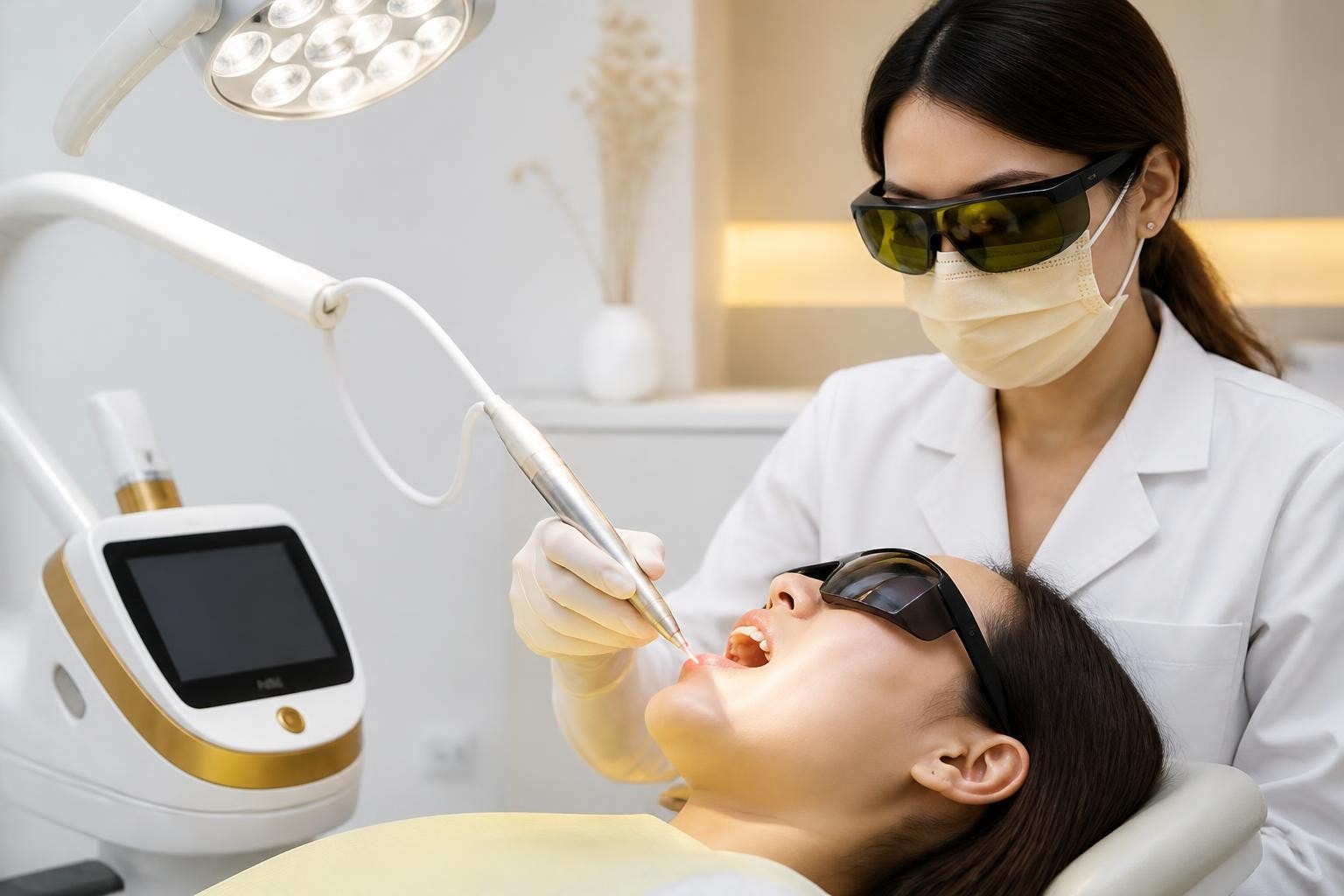
Modern dentistry continues to advance through innovative technologies that enhance precision, comfort, and clinical outcomes. Among these developments, laser technology has emerged as a valuable tool across multiple specialties. Understanding what is laser dentistry involves exploring how focused light energy can be applied to oral tissues, the specific wavelengths used for different procedures, and the clinical scenarios where lasers offer meaningful advantages over traditional approaches. This article provides a comprehensive overview of laser applications in contemporary dental practice, examining the science, clinical uses, safety considerations, and realistic expectations for patients considering laser-assisted procedures.
Understanding Dental Laser Technology
What is laser dentistry at its core? The term "laser" stands for Light Amplification by Stimulated Emission of Radiation. Dental lasers produce a concentrated beam of light energy at specific wavelengths that can interact with oral tissues in controlled ways. Unlike traditional mechanical instruments, lasers work through photonic energy that can cut, coagulate, or stimulate biological tissues depending on the wavelength, power settings, and tissue properties.
How Dental Lasers Work
Dental lasers function by delivering focused light energy that is absorbed by specific components in tissues. When laser light contacts tissue, several interactions can occur:
- Absorption: Target chromophores (water, hemoglobin, melanin) absorb the light energy
- Heat generation: Absorbed energy converts to thermal energy within tissues
- Tissue modification: Heat causes vaporization, coagulation, or controlled removal of tissue
- Photobiomodulation: Lower-power lasers stimulate cellular processes without thermal effects
The clinical outcome depends on matching the appropriate laser wavelength and power level to the intended procedure and tissue type. Current evidence demonstrates that different laser systems serve distinct clinical purposes based on their physical properties and tissue interactions.
Types of Dental Lasers
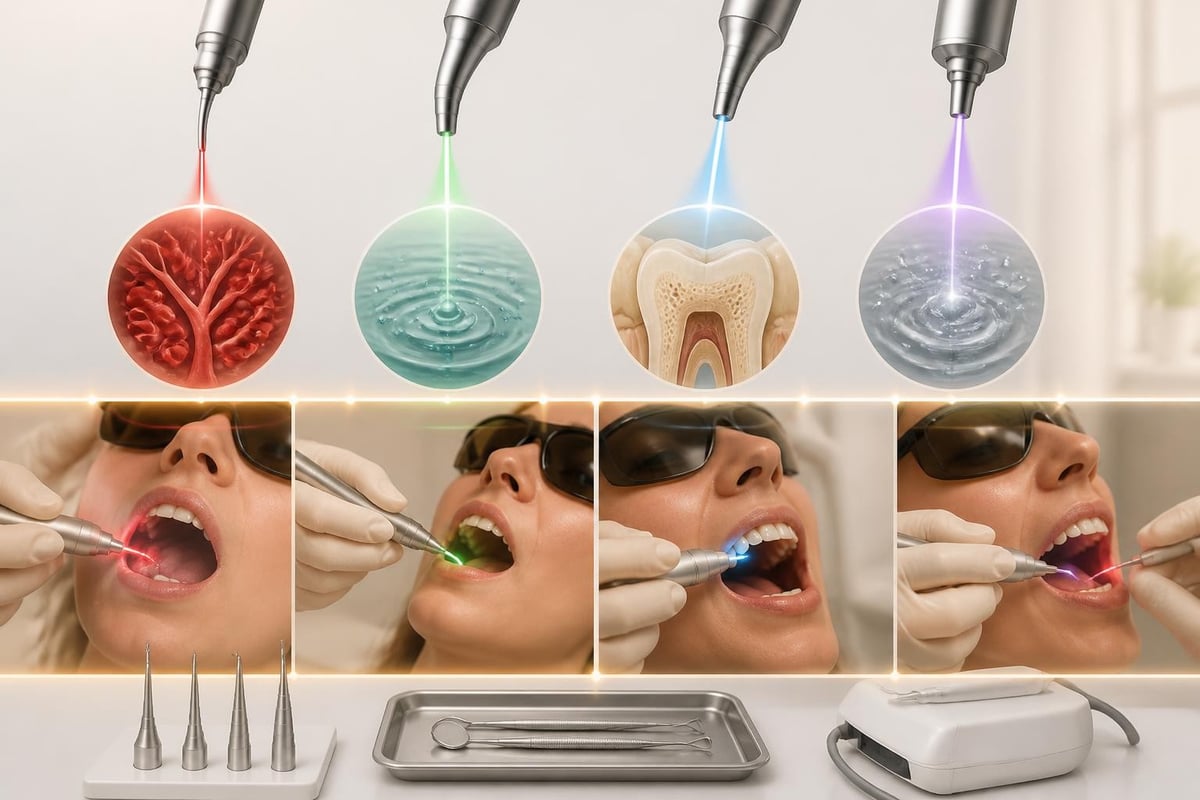
Several laser systems are used in dental practice, each with specific wavelengths and applications:
| Laser Type | Wavelength | Primary Applications | Tissue Affinity |
|---|---|---|---|
| Diode | 810-980 nm | Soft tissue surgery, periodontal therapy | Hemoglobin, melanin |
| Nd:YAG | 1064 nm | Soft tissue procedures, periodontal pockets | Pigmented tissues |
| Er:YAG | 2940 nm | Hard tissue, bone, soft tissue | Water |
| Er,Cr:YSGG | 2780 nm | Hard and soft tissue procedures | Water, hydroxyapatite |
| CO₂ | 10,600 nm | Soft tissue surgery, lesion removal | Water |
Each system offers specific advantages for particular procedures, and experienced practitioners select the appropriate technology based on clinical indications and evidence-based protocols.
Clinical Applications of Laser Dentistry
When exploring what is laser dentistry in practical terms, the range of clinical applications becomes apparent. Dental lasers serve distinct purposes across multiple specialties, though not every procedure benefits equally from laser assistance.
Soft Tissue and Gum Procedures
Soft tissue lasers excel in procedures involving gums and oral mucosa:
- Gum recontouring and cosmetic gingival procedures
- Frenectomy (removal of restrictive tissue bands)
- Biopsy and lesion removal
- Treatment of canker sores and other oral lesions
- Exposure of impacted teeth for orthodontic purposes
Soft tissue lasers can reduce bleeding during procedures through simultaneous coagulation, potentially minimizing the need for sutures in certain cases. The precision of laser energy allows for controlled tissue removal while preserving surrounding healthy structures.
Periodontal Therapy
In periodontal care, lasers serve as adjunctive tools in managing gum disease:
- Pocket decontamination: Laser energy can help reduce bacterial load in periodontal pockets
- Tissue removal: Diseased gum tissue can be selectively removed
- Inflammation reduction: Certain laser wavelengths may help manage inflammatory responses
- Root surface treatment: Some systems can be used alongside traditional scaling approaches
It is important to note that laser therapy for periodontal disease works best when integrated with comprehensive periodontal treatment including mechanical debridement, proper home care, and regular maintenance. Lasers complement but do not replace fundamental periodontal care principles, as highlighted in discussions about preventing gum disease through consistent oral hygiene.
Endodontic Applications
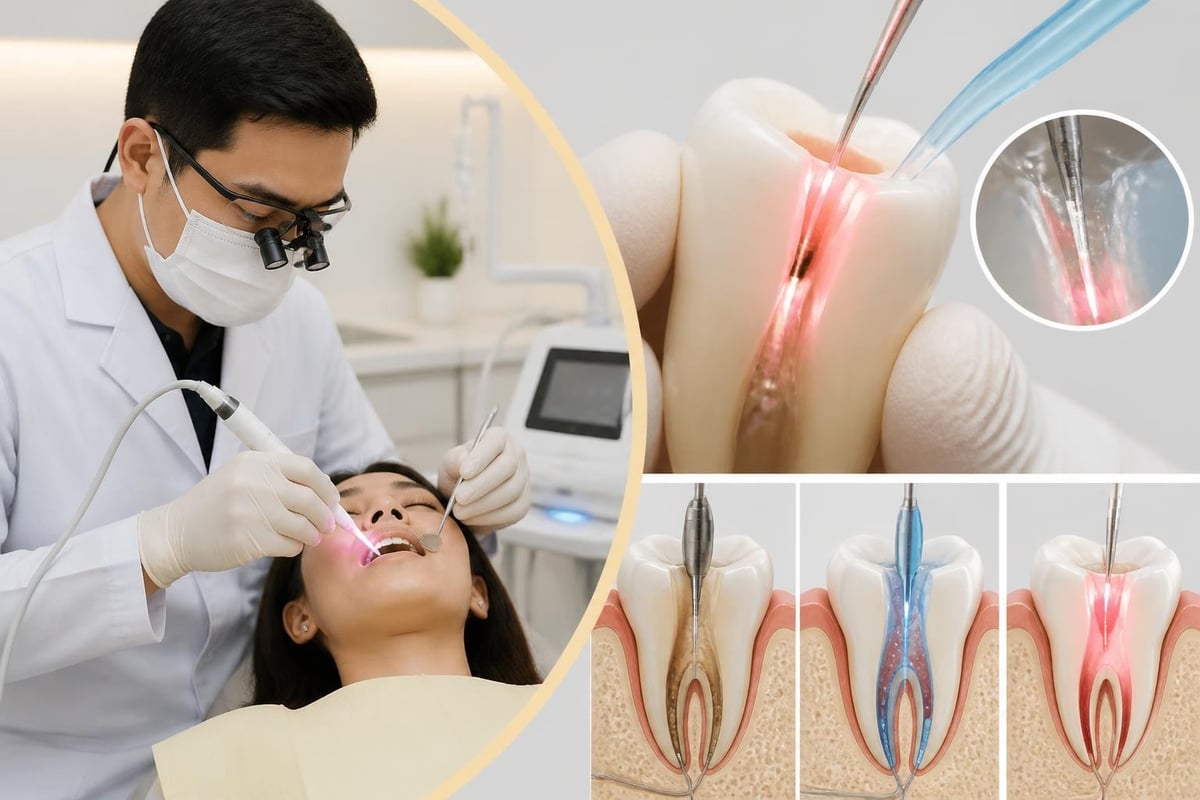
Root canal treatment has incorporated laser technology for specific purposes. Research on laser-assisted endodontics examines how different wavelengths can be used during canal preparation and disinfection. Lasers in endodontics may assist with:
- Enhanced disinfection of root canal systems
- Activation of irrigation solutions
- Removal of debris and smear layer
- Management of difficult anatomy
However, systematic evidence indicates that while lasers show promise as adjunctive tools, they must be used carefully with appropriate parameters to avoid thermal damage to surrounding bone and tissues. Laser-assisted endodontic procedures require specific training and proper technique to achieve safe, predictable outcomes.
Therapeutic and Pain Management Uses
Beyond cutting and surgical applications, understanding what is laser dentistry includes recognizing therapeutic uses of low-level laser therapy (LLLT) or photobiomodulation.
Photobiomodulation Therapy
Low-power lasers can stimulate cellular processes without causing thermal tissue damage:
- Acceleration of wound healing after surgical procedures
- Reduction of post-operative pain and inflammation
- Management of oral mucositis in cancer patients
- Treatment of temporomandibular joint discomfort
- Support for nerve regeneration after injury
Evidence on photobiomodulation suggests that specific wavelengths and dosimetry can influence cellular metabolism, potentially enhancing healing responses and providing analgesic effects. For patients experiencing jaw pain or TMJ disorders, photobiomodulation may serve as one component within a comprehensive TMJ and orofacial pain management approach that addresses multiple contributing factors.
Pain and Anxiety Reduction
Certain laser procedures may offer comfort advantages:
- Reduced need for local anesthesia in some soft tissue procedures
- Less post-operative discomfort in specific applications
- Quieter operation compared to traditional drills
- Minimal vibration during tissue interaction
These benefits vary depending on the procedure type, individual pain sensitivity, and proper technique. Not all laser procedures eliminate discomfort entirely, and anesthesia remains necessary for many applications to ensure patient comfort.
Safety and Limitations
A balanced understanding of what is laser dentistry requires acknowledging both capabilities and limitations. Laser technology offers distinct advantages in specific scenarios but is not universally superior to conventional techniques.
Safety Considerations
Professional laser dentistry prioritizes patient and operator safety through:
- Proper eye protection: Specific wavelength-blocking glasses for patients and staff
- Controlled settings: Precise calibration of power, pulse duration, and delivery mode
- Tissue monitoring: Careful observation to prevent thermal damage
- Operator training: Specialized education and clinical competency development
- Appropriate case selection: Using lasers only when clinically indicated
Organizations like the World Clinical Laser Institute provide educational resources and clinical guidance for practitioners integrating laser technology into evidence-based practice.
Clinical Limitations
Dental lasers have specific limitations that patients should understand:
- Not appropriate for all procedures or all tooth locations
- Cannot be used on teeth with existing metal restorations in certain applications
- Require specialized training and ongoing skill development
- May require longer appointment times for some procedures
- Cost considerations may affect accessibility
Traditional techniques remain essential and often preferred for many common dental procedures. The decision to use laser technology should be based on clinical appropriateness, evidence, and individualized treatment planning rather than marketing appeal.
Laser Dentistry vs. Traditional Techniques
Patients frequently ask how laser procedures compare to conventional approaches. The answer depends heavily on the specific procedure being considered.
When Lasers Offer Advantages
Laser technology may provide benefits in these scenarios:
- Soft tissue procedures requiring precise incisions with hemostasis
- Frenectomies in pediatric or adult patients
- Cosmetic gum recontouring for smile enhancement
- Biopsy of oral lesions with minimal bleeding
- Adjunctive periodontal therapy in specific cases
When Traditional Techniques Remain Preferred
Many dental procedures continue to be optimally performed with conventional instruments:
- Most cavity preparations and restorative procedures
- Crown and bridge preparations requiring specific margin designs
- Routine preventive care and cleanings
- Complex surgical extractions
- Initial periodontal therapy (scaling and root planing)
A well-equipped modern practice like CuraSmile PH integrates both laser and traditional technologies, selecting the most appropriate approach for each clinical situation based on evidence, expertise, and patient-specific factors.
What to Expect During Laser Dental Procedures
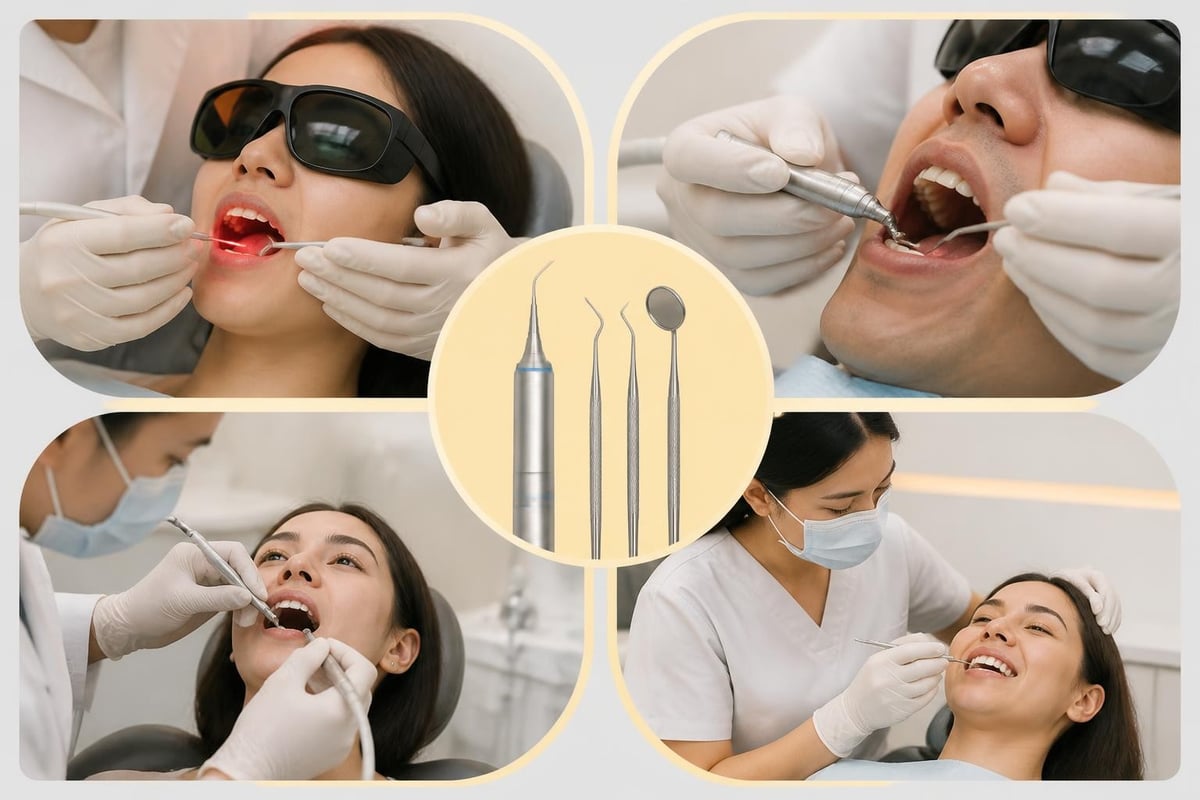
For patients considering laser-assisted treatment, understanding the procedural experience helps set appropriate expectations.
Before the Procedure
- Consultation: Discussion of treatment options, including both laser and conventional approaches
- Planning: Review of the specific procedure, expected outcomes, and alternatives
- Preparation: Eye protection will be provided; anesthesia may still be necessary depending on the procedure
- Questions: Open discussion about the technology, technique, and recovery expectations
During Treatment
The laser procedure experience varies by application:
- Protective eyewear must be worn by patient and staff
- You may hear different sounds compared to traditional instruments
- Some procedures require less anesthesia than conventional alternatives
- Treatment precision may allow for more conservative tissue removal
- Hemostasis (bleeding control) often occurs simultaneously with tissue interaction
After the Procedure
Post-operative experiences following laser procedures can include:
- Variable levels of discomfort depending on the extent of treatment
- Potentially reduced swelling in some soft tissue procedures
- Specific care instructions for optimal healing
- Follow-up appointments to monitor healing and outcomes
- Continuation of oral hygiene practices as directed
Recovery timelines and experiences vary significantly based on the specific procedure, individual healing capacity, and adherence to post-operative instructions.
Selecting a Provider for Laser Dentistry
Not all laser dentistry is equivalent. The technology itself is only one component of successful outcomes-clinical expertise, proper case selection, and evidence-based application matter significantly.
Important Considerations
When evaluating laser dental treatment options:
- Training and experience: Verify that the practitioner has completed appropriate laser education and maintains clinical competency
- Technology selection: Different clinical needs require specific laser systems
- Comprehensive approach: Lasers should be one tool within a full range of treatment options
- Evidence-based decision-making: Treatment recommendations should be based on clinical indications, not marketing
- Clear communication: Realistic discussion of expected outcomes, alternatives, and limitations
The integration of laser technology at practices like CuraSmile PH in BGC reflects a commitment to advanced, evidence-based dentistry that prioritizes clinical appropriateness and personalized care. Patients benefit most when laser applications are thoughtfully selected based on their specific dental needs rather than universally applied.
Cost and Accessibility Considerations
The financial aspect of laser dentistry varies depending on several factors:
- Procedure type: Simple soft tissue procedures differ from complex applications
- Technology requirements: Specific laser systems involve equipment investment
- Time considerations: Some laser procedures may require different appointment durations
- Coverage: Insurance coverage varies based on procedure medical necessity
- Alternative options: Conventional techniques may offer similar outcomes at different costs
Discussing treatment costs, payment options, and insurance considerations during consultation helps patients make informed decisions aligned with their clinical needs and financial circumstances.
The Future of Laser Applications in Dentistry
Laser technology continues to evolve with ongoing research into new applications and refinements:
- Enhanced precision through advanced delivery systems
- Integration with digital planning and guided procedures
- Expanded therapeutic applications in pain management and healing
- Development of more versatile wavelengths and systems
- Improved protocols based on accumulating clinical evidence
Ongoing research continues to evaluate laser applications across various dental specialties, helping to define best practices and evidence-based protocols. As the field advances, clinical applications will be refined based on scientific evidence rather than technological enthusiasm alone.
Common Questions About Laser Dentistry
Is laser dentistry completely painless?
While some laser procedures can be less uncomfortable than conventional alternatives, pain-free treatment is not guaranteed for all applications. Many laser procedures still require local anesthesia to ensure patient comfort. Pain experience varies based on procedure type, individual sensitivity, and tissue characteristics.
Can lasers replace traditional dental instruments entirely?
No. Dental lasers serve specific purposes but cannot replace all conventional instruments and techniques. A comprehensive dental practice maintains both laser and traditional technologies, selecting the most appropriate approach for each clinical situation.
Are laser procedures faster than traditional methods?
Procedure duration depends on the specific treatment. Some laser procedures may take longer than conventional techniques due to the methodical nature of laser tissue interaction. Time savings are not universal across all applications.
How do I know if I'm a good candidate for laser treatment?
Candidacy depends on your specific dental needs, the procedure being considered, and individual factors. A thorough clinical examination and consultation with an experienced practitioner will determine whether laser-assisted treatment is appropriate for your situation.
Understanding what is laser dentistry helps patients make informed decisions about their dental care options. Laser technology offers valuable capabilities for specific clinical applications when used appropriately by trained practitioners within an evidence-based framework. Rather than viewing lasers as universally superior or revolutionary, consider them as specialized tools that can enhance precision, comfort, and outcomes in carefully selected scenarios. If you are considering laser-assisted dental treatment in BGC, the experienced team at CuraSmile PH can evaluate your individual needs and discuss whether laser applications are appropriate as part of your comprehensive, personalized dental care plan.