Why Does My Jaw Click? Causes, Risks & When to Seek Help
Wondering why does my jaw click? Learn what causes jaw clicking, when it's a sign of TMJ disorder, and how CuraSmile PH in BGC can help.
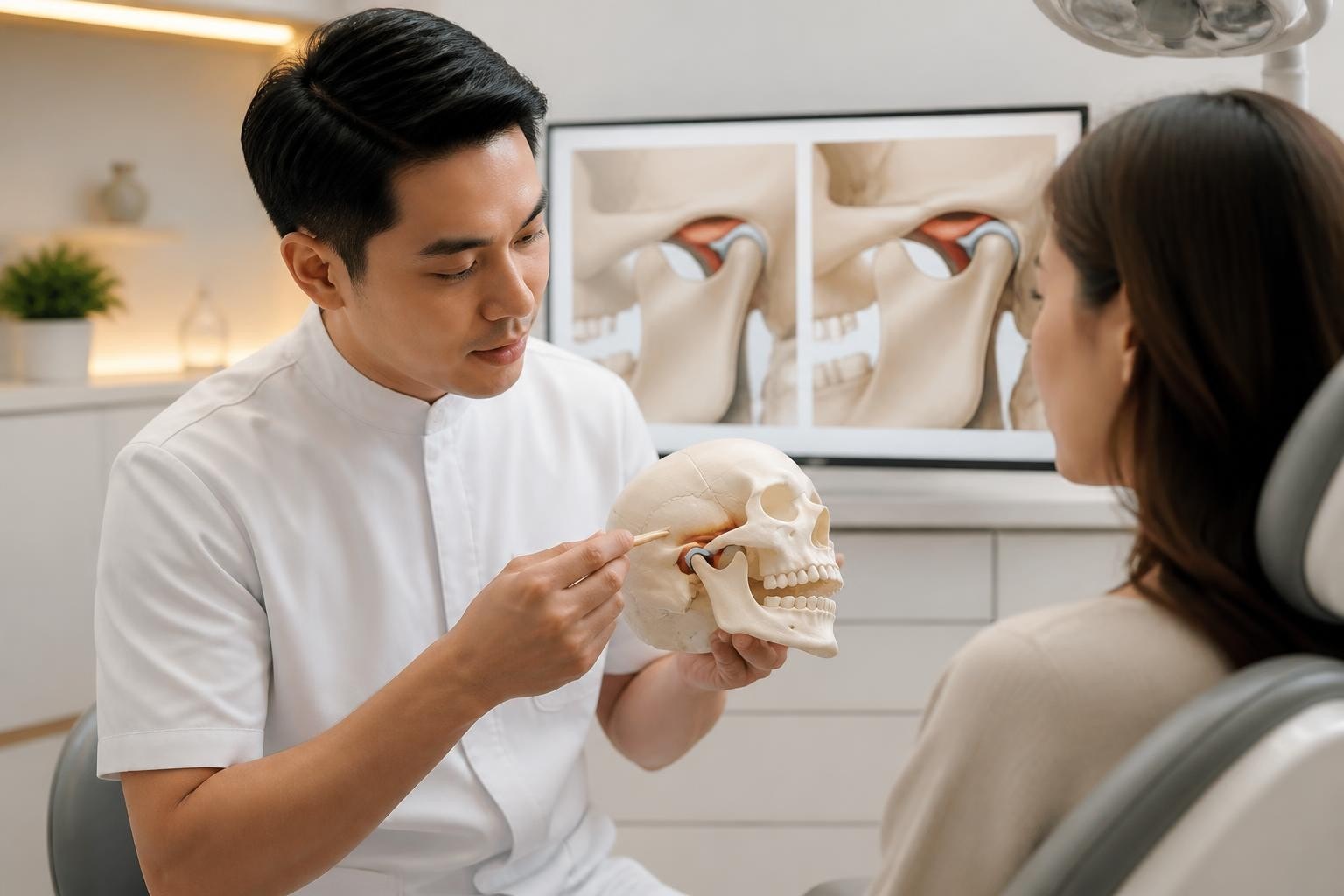
You open your mouth to yawn, take a bite of your favorite meal, or speak during a meeting, and you hear it-that distinct clicking, popping, or snapping sound coming from your jaw. If you've ever wondered "why does my jaw click," you're not alone. Jaw clicking is one of the most common symptoms reported to dental professionals, and while it can be unsettling, understanding the underlying causes, when it's a concern, and what treatment options are available can help you make informed decisions about your oral health. In this article, we'll explore the mechanical reasons behind jaw clicking, the connection to temporomandibular joint disorders, and how advanced diagnostic and treatment approaches can provide relief and restore normal function.
Understanding the Temporomandibular Joint and How It Works
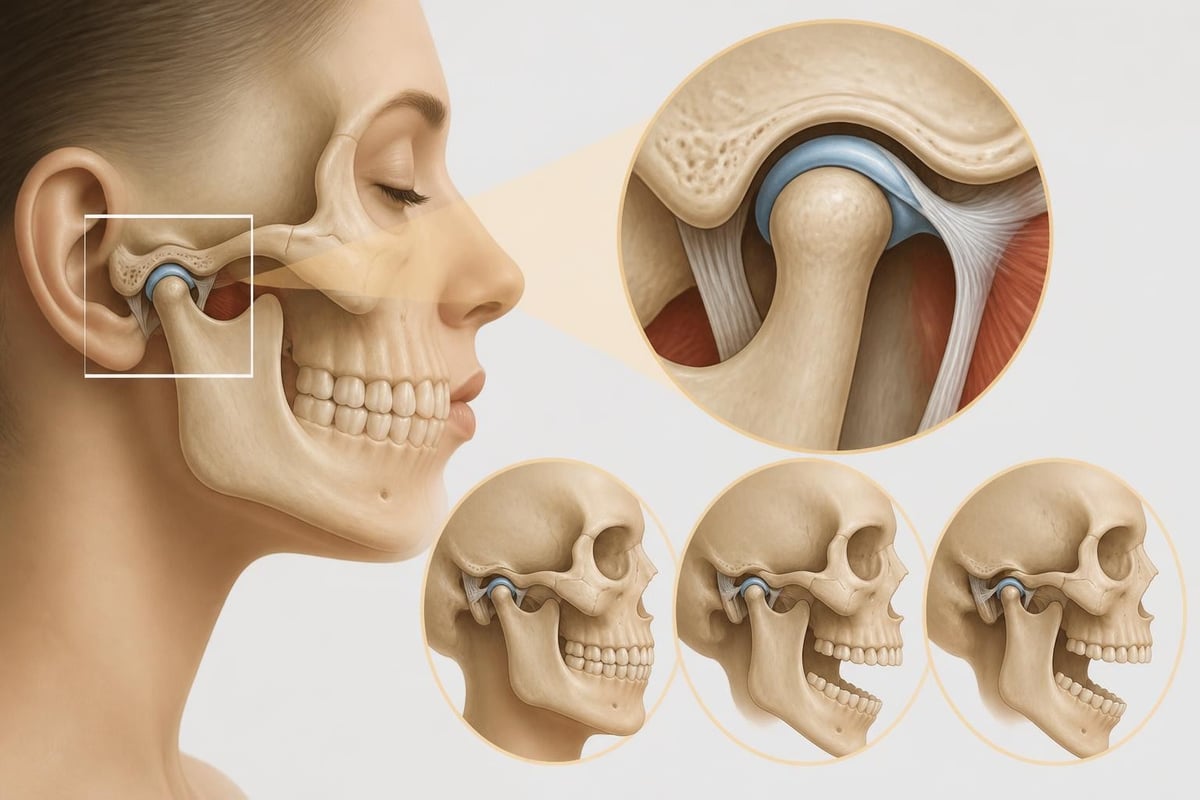
The temporomandibular joint (TMJ) is one of the most complex joints in the human body. Located on both sides of your head just in front of your ears, these joints connect your lower jaw (mandible) to your skull and enable a remarkable range of motion-opening, closing, forward movement, side-to-side gliding, and everything in between.
The Articular Disc: The Key Player in Jaw Clicking
Between the ball-shaped condyle of your jaw and the socket in your skull sits a small, cushion-like structure called the articular disc. This disc is made of fibrocartilage and acts as a shock absorber, allowing smooth, pain-free movement during daily activities. It's attached to the joint by ligaments and muscles, and in healthy function, the disc stays properly positioned between the bones as your jaw moves.
When you ask "why does my jaw click," the answer often lies in the position and movement of this articular disc. Under normal circumstances, the disc moves forward and backward in perfect coordination with the condyle. However, when the disc becomes displaced-shifting slightly forward or to the side-it may need to "pop" back into proper position during jaw opening. This repositioning creates the clicking or popping sound many people experience.
| Joint Component | Normal Function | When Displaced |
|---|---|---|
| Articular Disc | Moves smoothly with condyle | Shifts forward, requiring repositioning |
| Condyle | Glides within socket | May move unevenly or forcefully |
| Ligaments | Maintain disc position | Become stretched or lax |
| Joint Capsule | Provides stability | May develop inflammation |
Common Causes of Jaw Clicking
Understanding why your jaw clicks requires looking at the various factors that can affect the temporomandibular joint's delicate balance. The National Institute of Dental and Craniofacial Research provides comprehensive information on TMJ disorders and their varied presentations.
Disc Displacement With Reduction
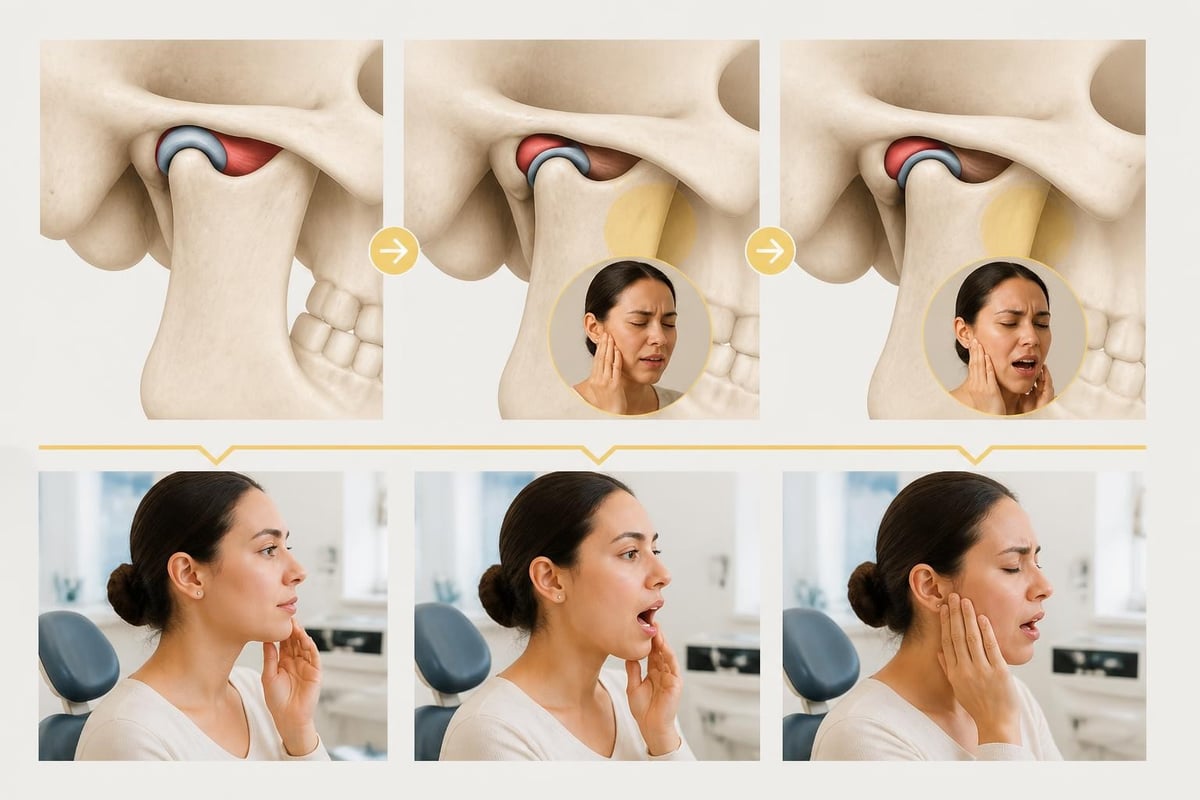
The most common mechanical explanation for jaw clicking is a condition called disc displacement with reduction. In this scenario, the articular disc has shifted slightly forward when your mouth is closed. As you open your jaw, the condyle moves forward and eventually "recaptures" the disc, causing it to pop back into its normal position. This repositioning creates the characteristic clicking sound.
Research published in peer-reviewed journals details how disc displacement with reduction presents clinically, including the typical clicking pattern, the natural progression of the condition, and diagnostic considerations that help differentiate it from other jaw disorders.
Structural and Biomechanical Factors
Several anatomical and functional factors contribute to why your jaw clicks:
- Joint hypermobility: Some individuals have naturally loose ligaments, allowing excessive movement that can lead to disc displacement
- Malocclusion: Bite misalignment can create uneven pressure on the TMJ structures
- Trauma: Previous injury to the jaw, face, or head can alter joint mechanics
- Degenerative changes: Wear and tear of joint surfaces over time may affect disc position
- Muscle imbalance: Tension or weakness in jaw muscles can pull the disc out of position
Habits and Behavioral Contributors
Daily habits play a significant role in TMJ function and may explain why does my jaw click in some individuals. Teeth grinding (bruxism), jaw clenching, nail biting, chewing gum excessively, or holding the phone between your shoulder and jaw can all place extra stress on the joint structures. These repetitive forces may gradually stretch the ligaments that hold the disc in place, leading to displacement and clicking.
For patients who suspect teeth grinding or clenching contributes to their jaw clicking, our TMJ & Orofacial Pain Management service provides comprehensive evaluation and personalized treatment planning to address these contributing factors and relieve associated discomfort.
When Jaw Clicking Is a Concern
Not all jaw clicking requires immediate treatment. Many people live with painless clicking for years without developing additional problems. However, certain signs and symptoms warrant professional evaluation.
Red Flags That Require Assessment
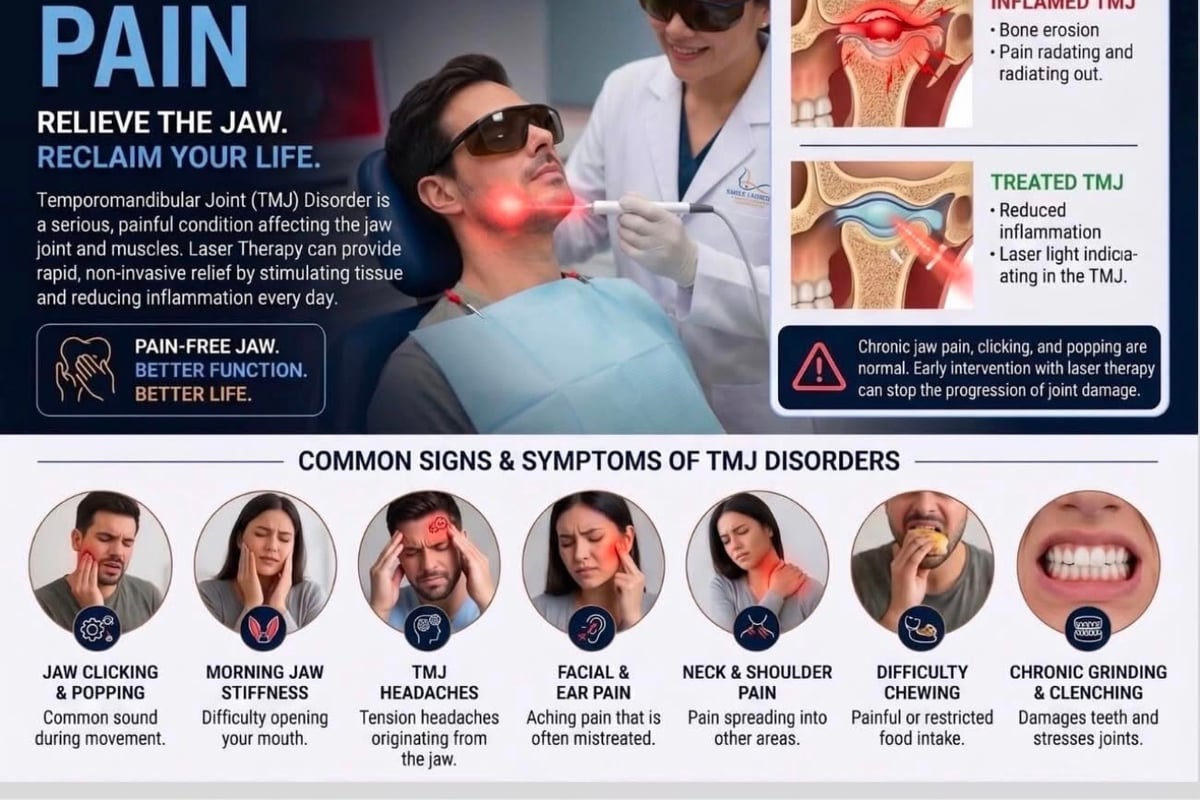
Pain or discomfort: If clicking is accompanied by pain in the jaw, face, ear, or temple region, this suggests active inflammation or tissue stress that may benefit from intervention.
Limited mouth opening: Difficulty opening your mouth fully, or jaw locking in the open or closed position, indicates progression beyond simple disc displacement with reduction.
Changes in bite: If your teeth suddenly fit together differently, this may signal changes in joint position that require attention.
Progression of symptoms: Clicking that worsens over time, becomes more frequent, or develops into more severe symptoms should be evaluated.
The American Academy of Family Physicians offers evidence-based guidance on recognizing temporomandibular disorders and understanding when primary care referral to dental specialists is appropriate.
The Natural History of Disc Displacement
Understanding the potential progression of jaw clicking helps explain why early evaluation is valuable. Disc displacement with reduction (clicking) can sometimes progress to disc displacement without reduction (locking), where the disc remains displaced and no longer recaptures during jaw opening. This condition typically presents as sudden restriction of mouth opening rather than clicking, and often requires different management strategies.
Diagnostic Approaches for Jaw Clicking
When you seek professional help to understand why does my jaw click, a comprehensive evaluation typically includes several components designed to identify the specific cause and severity of your condition.
Clinical Examination
A thorough TMJ examination at CuraSmile PH in BGC includes:
- Range of motion assessment: Measuring how far you can open your mouth and whether deviation occurs
- Joint palpation: Feeling the joint during movement to detect clicking, crepitus, or irregularities
- Muscle examination: Checking for tenderness, tension, or trigger points in the jaw muscles
- Occlusal analysis: Evaluating how your teeth come together and whether bite factors contribute to joint stress
- Functional assessment: Observing jaw movement patterns during speaking, chewing, and other activities
Advanced Imaging When Indicated
While clinical examination is often sufficient for diagnosis and initial management planning, certain situations benefit from advanced imaging. The American Academy of Oral and Maxillofacial Radiology provides position statements on appropriate TMJ imaging, helping clinicians determine when MRI or CBCT (cone beam computed tomography) is indicated for suspected internal derangement.
Magnetic Resonance Imaging (MRI): The gold standard for visualizing soft tissues, including the articular disc position and integrity. MRI can definitively show disc displacement, perforation, or other structural changes.
CBCT: Excellent for evaluating bony structures and detecting degenerative changes, remodeling, or other hard tissue abnormalities.
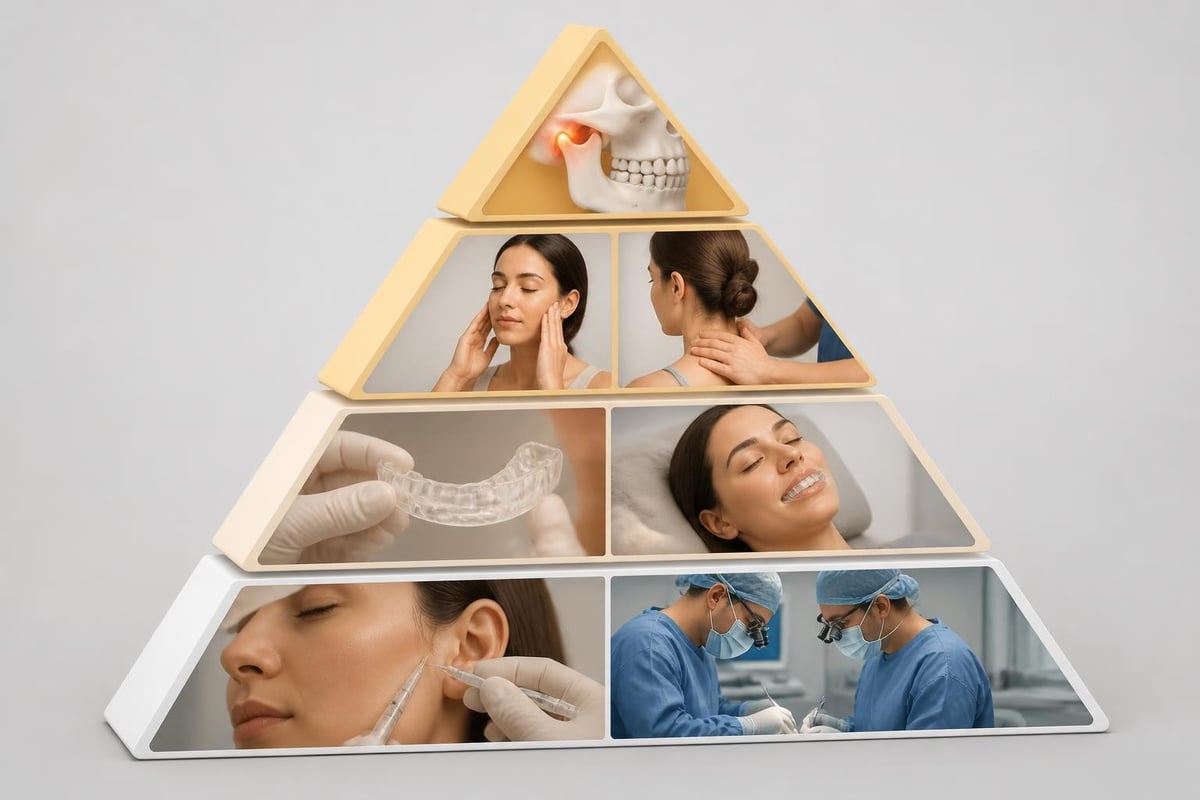
Conservative Management and Treatment Options
Most patients who ask "why does my jaw click" can be effectively managed with conservative, non-surgical approaches. Current evidence strongly supports starting with the least invasive treatments and progressing only if necessary.
Self-Care and Lifestyle Modifications
The foundation of TMJ management involves behavioral changes and self-care strategies:
- Rest the joint: Avoid excessive jaw use, hard foods, wide yawning, and prolonged chewing
- Apply thermal therapy: Warm compresses can relax muscles; cold packs reduce inflammation
- Practice stress management: Tension often manifests as jaw clenching and grinding
- Maintain good posture: Forward head posture increases strain on jaw muscles
- Perform gentle jaw exercises: Controlled movements can improve coordination and reduce clicking
The NHS provides practical guidance on jaw exercises and conservative self-management strategies that many patients find helpful as part of their home care routine.
Physical Therapy and Rehabilitation
Specialized TMJ physical therapy can address muscle imbalances, improve joint mechanics, and reduce symptoms. Manual therapy techniques, ultrasound, and targeted exercises help restore normal function and reduce clicking frequency.
| Treatment Approach | Primary Goal | Typical Duration |
|---|---|---|
| Self-care modifications | Reduce joint stress | Ongoing |
| Physical therapy | Improve function | 6-12 weeks |
| Occlusal splint therapy | Protect joint, reduce clenching | 3-6 months |
| Medications (if needed) | Manage pain/inflammation | Short-term |
| Behavioral therapy | Address habits | Variable |
Occlusal Splint Therapy
Custom-fabricated oral appliances, often called splints or night guards, are commonly prescribed for TMJ disorders. These devices can reduce the load on the joint, minimize the effects of teeth grinding, and sometimes improve jaw positioning. However, as discussed in professional dental journals, splint therapy requires careful clinical decision-making, proper fabrication, and ongoing monitoring to ensure effectiveness.
At CuraSmile PH, we take a personalized approach to splint therapy, carefully assessing whether it's indicated for your specific condition and creating custom appliances designed for your unique jaw anatomy and functional needs.
The Role of Advanced Technology in TMJ Assessment
Modern dental technology has transformed how we evaluate and manage jaw clicking. Advanced diagnostic tools allow for more precise assessment and treatment planning.
Digital Jaw Tracking and Bite Analysis
Computerized systems can track jaw movement patterns in three dimensions, revealing subtle deviations, clicking timing, and functional limitations that might not be apparent during traditional examination. Digital occlusal analysis shows exactly how teeth contact during biting and chewing, identifying pressure points that may contribute to joint stress.
3D Imaging for Comprehensive Evaluation
CBCT 3D imaging provides detailed views of the TMJ bony structures from multiple angles, allowing precise evaluation of joint anatomy, symmetry, and any degenerative changes. This technology is particularly valuable when surgical consultation is being considered or when conventional imaging hasn't provided sufficient information.
Preventing TMJ Dysfunction and Jaw Clicking
While not all cases of jaw clicking can be prevented, certain strategies can reduce your risk or prevent progression of mild symptoms.
Protect Your Jaw During Daily Activities
Be mindful of jaw use: Avoid habitually chewing on one side, opening packages with your teeth, or biting into extremely hard foods. These habits create uneven stress on the TMJ.
Manage stress effectively: Since stress often manifests as jaw tension, incorporating relaxation techniques, regular exercise, and adequate sleep can reduce clenching and grinding behaviors.
Maintain proper posture: Slouching or forward head posture increases strain on neck and jaw muscles. Ergonomic workstation setup and postural awareness make a significant difference.
Address Contributing Dental Factors
Misaligned teeth or bite problems can place abnormal stress on the TMJ. Orthodontic treatment with clear aligners can sometimes improve bite relationships and reduce joint loading. Similarly, replacing missing teeth or correcting worn restorations helps maintain proper jaw positioning and function.
Early Intervention for Symptoms
If you notice jaw clicking developing, don't wait for it to become painful or limiting. Early evaluation allows for conservative management that can prevent progression to more severe TMJ disorders.
Understanding the Multidisciplinary Approach
Complex TMJ cases often benefit from collaboration among different healthcare professionals. Your dentist may work with physical therapists, pain specialists, orthodontists, or oral surgeons to develop a comprehensive treatment plan tailored to your specific needs.
When Surgical Consultation May Be Appropriate
The vast majority of patients asking "why does my jaw click" will never require surgery. However, a small percentage of individuals with severe, persistent symptoms that don't respond to conservative care may benefit from surgical evaluation. Procedures range from minimally invasive arthroscopy to open joint surgery, reserved for specific structural problems that cannot be managed otherwise.
Surgical decisions require careful consideration, second opinions, and thorough discussion of risks, benefits, and alternatives. At reputable dental practices like CuraSmile PH, the emphasis remains on evidence-based care and exhausting conservative options before considering invasive approaches.
Living With Jaw Clicking: What to Expect
For many people, jaw clicking is a chronic but manageable condition that doesn't significantly impact quality of life. Understanding what to expect helps set realistic expectations and reduces anxiety about the condition.
Prognosis and Long-Term Outlook
Research shows that many cases of TMJ clicking remain stable over time. Some individuals experience spontaneous improvement, while others continue to click without developing pain or limitation. The key is monitoring for changes and seeking professional guidance if symptoms progress.
Positive prognostic factors include:
- Painless clicking
- No history of trauma
- Good jaw range of motion
- No accompanying headaches or ear symptoms
- Effective stress management
Factors suggesting need for closer monitoring:
- Pain development
- Increasing frequency or intensity
- Mouth opening limitation
- Affecting sleep or eating
- Associated with grinding or clenching
Adapting Daily Habits for Long-Term Joint Health
Making small adjustments to protect your TMJ can have lasting benefits. Cut food into smaller pieces rather than taking large bites. Avoid chewing gum or other repetitive jaw activities. Take breaks during lengthy conversations or presentations to rest your jaw. These simple strategies reduce cumulative stress on the joint structures.
The Importance of Personalized Assessment
Generic advice about jaw clicking has limited value because each person's situation is unique. The exact reasons why your jaw clicks-the interplay of anatomical factors, muscle function, habits, stress levels, dental occlusion, and medical history-require individualized assessment and treatment planning.
A comprehensive evaluation considers all contributing factors and develops a management approach specifically designed for your condition, lifestyle, and goals. This personalized strategy is far more effective than one-size-fits-all recommendations.
Jaw clicking is a common symptom with varied causes, ranging from benign disc displacement to more complex TMJ disorders that benefit from professional management. Understanding the mechanical reasons behind the clicking, recognizing when evaluation is warranted, and knowing that effective conservative treatments exist empowers you to take control of your jaw health. If you're experiencing jaw clicking, pain, or limited function, the experienced team at CuraSmile PH in Bonifacio Global City provides comprehensive TMJ evaluation, advanced diagnostic technology, and personalized treatment planning to help you achieve comfortable, healthy jaw function.