Why Do My Gums Bleed When I Brush? Causes & Solutions
Discover the common causes behind bleeding gums when brushing, warning signs to watch for, and evidence-based prevention steps for healthier gums.

If you've noticed pink-tinged toothpaste or blood in the sink after brushing, you're not alone. Many patients ask "why do my gums bleed when I brush?" during dental visits, often uncertain whether it's a minor issue or a sign of something more serious. While occasional bleeding might seem like a small concern, understanding the underlying causes helps you take appropriate action to protect your oral health. Bleeding gums are rarely normal, and they usually indicate that your gum tissues need attention, whether through improved home care, professional cleaning, or specialized treatment.
The Most Common Reason: Gum Inflammation
Gingivitis, the earliest stage of gum disease, is the primary answer to why do my gums bleed when I brush. When bacterial plaque accumulates along the gumline, your immune system responds with inflammation. The inflamed gum tissue becomes swollen, tender, and more fragile than healthy tissue.
Think of it this way: healthy gums are firm and resilient, similar to the skin on your knuckles. Inflamed gums resemble a healing bruise, where even gentle pressure causes bleeding. The NHS describes gum disease as a common condition where gums become swollen, sore, or infected, with bleeding during brushing or flossing being one of the earliest warning signs.
How Plaque Triggers Bleeding
Dental plaque is a soft, sticky film of bacteria that constantly forms on your teeth. When you miss spots during brushing or skip flossing, plaque matures and releases toxins that irritate gum tissue. Your body sends more blood to the area to fight the bacterial invasion, which is why inflamed gums appear redder than healthy pink gums.
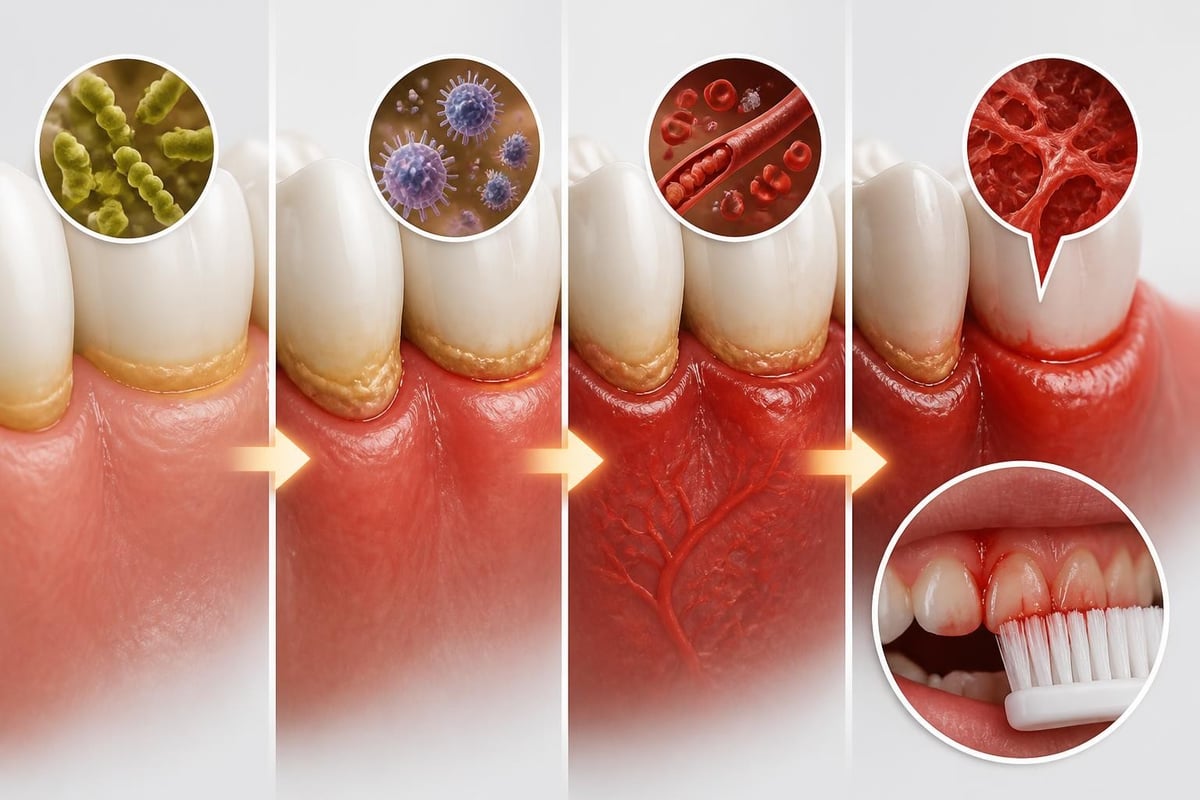
Within 24 to 48 hours, undisturbed plaque begins to harden into calculus (tartar), which you can't remove at home. This creates a rough surface where even more bacteria collect, establishing a cycle of inflammation and bleeding that requires professional teeth cleaning to interrupt.
When Technique and Tools Matter
Sometimes the answer to why do my gums bleed when I brush relates more to how you brush than to gum disease itself. Aggressive brushing, hard-bristled toothbrushes, and improper flossing technique can all traumatize healthy gum tissue.
- Brushing too hard: Scrubbing vigorously doesn't clean better; it damages delicate gum tissue and wears away tooth enamel
- Wrong brush choice: Hard or medium bristles can irritate gums, while soft or extra-soft bristles clean effectively without trauma
- Sawing floss motion: Forcing floss up and down against gums creates tiny cuts; gentle C-shaped curves work better
- New flossing routine: If you've just started flossing after a long break, expect mild bleeding for a few days as gums adjust
The American Dental Association's home oral care guidance emphasizes gentle, thorough technique over forceful scrubbing. Use a soft-bristled brush at a 45-degree angle to the gumline, making small circular motions rather than harsh back-and-forth strokes.
Beyond Gingivitis: Periodontitis and Deeper Concerns
If gingivitis goes untreated, it can progress to periodontitis, a more serious condition where inflammation extends below the gumline and begins destroying the bone and connective tissue that hold teeth in place. At this stage, bleeding becomes more pronounced and may occur spontaneously, not just during brushing.
The American Academy of Periodontology explains that periodontitis develops when bacterial toxins and your body's immune response start breaking down the structures supporting your teeth. Other warning signs include:
- Gums that pull away from teeth, creating pockets
- Persistent bad breath despite good oral hygiene
- Loose or shifting teeth
- Changes in how your teeth fit together when you bite
- Pus between teeth and gums
The Clinical Assessment Process
When you visit CuraSmile PH with concerns about bleeding gums, your dentist performs a comprehensive periodontal examination. This includes measuring pocket depths around each tooth, evaluating bleeding on probing, checking for tooth mobility, and reviewing your medical history.
Periodontal diagnosis research shows that bleeding on gentle probing is a sensitive indicator of active inflammation. Healthy gums shouldn't bleed when a periodontal probe is gently inserted into the space between tooth and gum. This clinical finding helps your dentist determine whether you need basic cleaning, deep cleaning (scaling and root planing), or more advanced periodontal therapy.
Medical Conditions That Affect Gum Bleeding
Sometimes why do my gums bleed when I brush has less to do with oral hygiene and more to do with systemic health conditions or medications that affect your blood or immune system.
| Condition/Factor | How It Contributes to Bleeding |
|---|---|
| Diabetes | Elevated blood sugar impairs immune function and wound healing, making gums more susceptible to infection and bleeding |
| Blood disorders | Conditions like leukemia, hemophilia, or low platelet counts reduce normal clotting ability |
| Vitamin deficiencies | Vitamin C and K deficiencies weaken blood vessels and clotting mechanisms |
| Hormonal changes | Pregnancy, menstruation, and menopause alter blood flow to gums and inflammatory response |
| Medications | Blood thinners, aspirin, and some antidepressants increase bleeding tendency |
Vitamin C Deficiency and Gum Health
While rare in developed countries, vitamin C deficiency (scurvy) causes characteristic gum problems. A systematic review on vitamin C and bleeding tendency found that inadequate ascorbic acid intake can lead to weakened blood vessel walls and increased bleeding from gums and other tissues.
BMJ Best Practice notes that even subclinical vitamin C deficiency may contribute to bleeding gums in some patients. If you have a restricted diet, malabsorption issues, or are a heavy smoker (which depletes vitamin C), discuss nutritional assessment with your healthcare provider.

Pregnancy and Hormonal Gingivitis
Many pregnant women experience increased gum sensitivity and bleeding, even when maintaining good oral hygiene. Pregnancy gingivitis affects up to 75% of expectant mothers, typically appearing in the second trimester.
Hormonal changes during pregnancy increase blood flow to gum tissue and alter how your body responds to bacterial plaque. The same amount of plaque that caused no problems before pregnancy may now trigger noticeable inflammation and bleeding. This condition usually resolves after delivery but requires careful attention during pregnancy to prevent progression.
If you're experiencing pregnancy-related gum bleeding:
- Continue gentle brushing twice daily with a soft brush
- Floss carefully once daily
- Rinse with plain water or alcohol-free mouthwash
- Schedule professional cleanings during your second trimester
- Inform your dentist about your pregnancy and any related health changes
Prevention Strategies That Work
Understanding why do my gums bleed when I brush empowers you to take effective preventive action. Most cases of bleeding gums respond well to improved oral hygiene and regular professional care.
Daily Home Care Fundamentals
Brushing technique: Use a soft-bristled brush with fluoride toothpaste for two minutes, twice daily. Hold the brush at a 45-degree angle where tooth meets gum, using gentle circular motions. Don't forget to brush along the gumline and the inner surfaces of teeth where plaque often hides.
Flossing properly: Thread 18 inches of floss between your fingers, leaving about two inches to work with. Curve the floss around each tooth in a C-shape and gently slide it beneath the gumline, moving up and down against the tooth surface. Use a fresh section of floss for each tooth to avoid redistributing bacteria.
Antimicrobial rinse: While not a substitute for mechanical plaque removal, an antimicrobial mouthwash can help reduce bacterial load between cleanings. Choose alcohol-free formulas to avoid tissue irritation.
Professional Care Schedule
Even with excellent home care, professional cleaning removes calculus and reaches areas you can't access with a toothbrush or floss. Most patients benefit from professional cleanings every six months, though those with gum disease history or other risk factors may need more frequent appointments.
Your dental hygienist or dentist at CuraSmile PH can personalize your maintenance schedule based on your individual periodontal health, medical history, and how quickly calculus accumulates on your teeth.
When Bleeding Gums Require Immediate Attention
While most gum bleeding relates to manageable gingivitis, certain patterns warrant prompt professional evaluation:
- Spontaneous bleeding that occurs without brushing or eating
- Bleeding that won't stop after several minutes of gentle pressure
- Sudden onset of severe bleeding with no clear cause
- Bleeding accompanied by severe pain, fever, or swelling
- Bleeding plus loose teeth or pus discharge
These symptoms may indicate advanced periodontal disease, infection, or systemic health issues that need urgent assessment. Don't wait for your routine checkup if you experience these warning signs.
The Role of Advanced Diagnostics
Modern periodontal assessment goes beyond visual examination and probing. At advanced dental practices, technologies like digital imaging and laser diagnostics provide detailed information about gum and bone health.
3D cone beam imaging reveals bone loss patterns that aren't visible on standard X-rays, helping dentists create more accurate treatment plans. Laser dentistry offers gentle, precise treatment for inflamed gum tissue, often with less discomfort and faster healing than traditional approaches.
For patients with persistent gum bleeding despite good home care, comprehensive fresh breath assessment can uncover hidden factors. Fresh breath therapy includes evaluation of bacterial colonization patterns and periodontal health factors that contribute to both bleeding and breath concerns.

Treatment Approaches for Different Causes
The appropriate treatment for bleeding gums depends on the underlying cause and severity of the condition.
| Condition | Typical Treatment Approach |
|---|---|
| Early gingivitis | Improved home care, professional cleaning, antimicrobial rinse |
| Moderate gingivitis | Thorough cleaning, more frequent maintenance, technique coaching |
| Periodontitis | Scaling and root planing (deep cleaning), possible antibiotics, ongoing monitoring |
| Advanced periodontitis | Surgical intervention, bone grafting, specialized periodontal care |
| Technique-related trauma | Brushing/flossing instruction, softer brush, gentler approach |
| Medication-related | Coordinate with prescribing physician, enhanced preventive care |
Many patients see significant improvement within two weeks of starting proper home care combined with professional cleaning. However, reversing advanced gum disease takes longer and requires commitment to both treatment and maintenance.
Building Long-Term Gum Health
Once you've addressed why do my gums bleed when I brush and taken corrective action, maintaining healthy gums becomes a lifelong commitment. Think of it like fitness: you can't exercise for a month and expect permanent results. Consistent daily care prevents problems from returning.
Lifestyle Factors That Support Gum Health
- Nutrition: A balanced diet rich in vitamins C and K, calcium, and antioxidants supports tissue repair and immune function
- Hydration: Adequate water intake helps wash away food particles and maintains saliva production
- Stress management: Chronic stress weakens immune response and increases inflammation throughout the body
- Tobacco cessation: Smoking dramatically increases periodontitis risk and impairs healing
- Blood sugar control: Keeping diabetes well-managed reduces infection risk and promotes healing
Your gums are living tissue that responds to both positive and negative influences. Creating an environment that supports healing means addressing all contributing factors, not just brushing more frequently.
Questions to Ask Your Dentist
When you discuss bleeding gums with your dental care provider, come prepared with specific observations:
- When did you first notice the bleeding?
- Does it happen every time you brush, or only in certain areas?
- Have you changed your brushing technique, toothpaste, or floss recently?
- Are you taking any new medications or supplements?
- Have you experienced other symptoms like pain, swelling, or loose teeth?
- What's your current oral hygiene routine?
Your answers help your dentist determine whether you need basic preventive care, more intensive treatment, or medical consultation for systemic factors. The more details you provide, the more precisely your care can be tailored to your situation.
Why Early Intervention Matters
Addressing bleeding gums promptly prevents more serious problems down the road. Gingivitis is reversible, but periodontitis causes permanent damage to the structures supporting your teeth. Once bone loss occurs, treatment focuses on stopping further destruction rather than regenerating lost tissue (though some regenerative procedures can help in specific situations).
Beyond oral health, emerging research continues to explore connections between periodontal disease and systemic conditions including cardiovascular disease, diabetes complications, and adverse pregnancy outcomes. While these relationships are complex and still being studied, they underscore why maintaining healthy gums matters for your overall wellbeing, not just your smile.
Bleeding gums when you brush usually signals inflammation that needs attention, whether through improved home care technique or professional treatment for established gum disease. Understanding the specific cause in your situation is the first step toward healthier gum tissue that doesn't bleed during routine oral care. At CuraSmile PH, our team combines comprehensive periodontal assessment with evidence-based treatment approaches tailored to your individual needs. If you're experiencing persistent gum bleeding or have concerns about your oral health, we invite you to schedule an evaluation at our Bonifacio Global City clinic.